
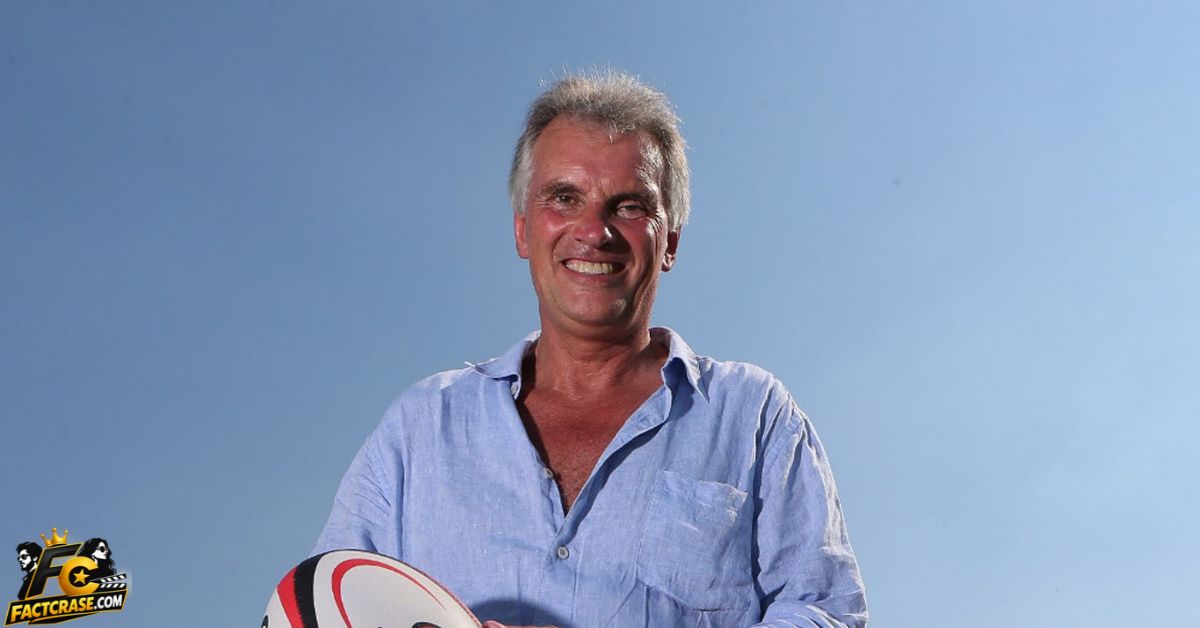

Nigel Wray is a prominent British entrepreneur, investor and company director known for his influence across business, franchising and professional sport. Born in London in April 1948, he built a diverse career through property development, financial publishing and long-term investments. His business journey includes major involvement with Domino’s Pizza UK & Ireland, co-founding Franchise Brands plc and investing in companies such as Chapel Down Group and Sosandar. Beyond business, he became widely recognised for supporting Saracens Rugby Club, helping transform it into a successful professional rugby organisation. His career also includes sporting philanthropy, the Priory Collection and a controversial salary-cap dispute that shaped his public legacy.
Quick Facts
| Key Facts | Details |
| Full Name | Nigel William Wray |
| Date of Birth | April 1948 |
| Age (2026) | 78 years old |
| Birthplace | London, England |
| Nationality | British |
| Education | Mill Hill School |
| University | University of Bristol |
| Degree | Economics and Economic History |
| Profession | British Entrepreneur, Investor and Company Director |
| Business Co-founded | Franchise Brands plc (2008) |
| Former Business Role | Director of Domino’s Pizza Group |
| Sporting Connection | Former Saracens Rugby Club Chairman |
Nigel Wray’s Early Life and Education
Nigel William Wray was born in London in April 1948. He grew up in Britain and developed an interest in business, finance and investment before establishing his professional career. Although he became a recognisable figure in British business and sport, information about his childhood, parents and family background remains relatively limited in publicly available biographies.
His education played an important role in developing the commercial knowledge that later influenced his investment decisions. He attended Mill Hill School, an independent school in north London with a long history of educating students who went on to pursue careers in business, public service and other professional fields.
Wray subsequently studied at the University of Bristol, where he pursued Economics and Economic History. He entered the university in 1967 and graduated in 1970 with a 2:1 degree.
His academic background provided a foundation in economic systems, financial markets and commercial decision-making. These subjects became relevant throughout his career as he evaluated companies, considered investment opportunities and developed business relationships.
In 2005, the University of Bristol awarded him an Honorary Doctor of Laws in recognition of his contribution and association with the institution. His educational connections also include the Old Millhillians community, which brings together former students of Mill Hill School.
Nigel Wray’s First Steps in Business

After completing his education, Wray began developing the commercial experience that would eventually support his entrepreneurial investing career. Rather than concentrating on a single industry, he explored different business opportunities and gained exposure to financial services, property and smaller commercial enterprises.
His early approach helped establish a pattern that continued throughout his professional life: identifying businesses with potential, investing capital and working alongside people who understood their markets.
Banking and Early Commercial Experience
Wray’s early professional experience included working as a graduate trainee at Singer & Friedlander, a British merchant bank. Merchant banking provided exposure to corporate finance, investment decisions and commercial relationships.
This experience helped him understand how companies raised money, managed financial resources and assessed business opportunities.
Banking also introduced him to the importance of evaluating risk before committing capital. These lessons later became relevant to his investments in public companies and privately held businesses.
Property Development
Property development became another important part of Wray’s business activities. He developed an interest in property assets, particularly opportunities involving residential and commercial locations.
His property interests included Hampstead properties and other investments connected with the British property market.
Property businessman is an appropriate description of one part of his career, although his activities extended well beyond real estate. His broader investment approach involved looking for undervalued assets, assessing long-term demand and considering how experienced management could improve a business.
This combination of property development and financial experience helped establish the foundations for his later investment activities.
Fleet Street Letter and Financial Publishing
Financial publishing was an important stage in Wray’s entrepreneurial development. He became associated with the Fleet Street Letter, a financial publication aimed at private investors interested in understanding markets and identifying investment opportunities.
The publication operated within a subscription business model, providing financial commentary and investment-related information to readers.
Wray’s involvement reflected his understanding that financial knowledge could become a commercial product. Instead of concentrating exclusively on investing his own money, he also participated in a business that communicated financial ideas to a wider audience.
His association with financial publishing included the Penny Share Guide, which focused on smaller companies and investment opportunities that might receive less attention from mainstream financial publications.
This area of business connected several of his interests:
- Small-company finance and investment opportunities.
- Financial information for individual investors.
- Subscription-based recurring income.
- Research into overlooked businesses.
- Public interest in smaller quoted companies.
Financial publishing also helped strengthen his understanding of private investors and the factors influencing their decisions.
Domino’s Pizza and Franchise Brands
Franchising became one of the most visible parts of Wray’s business career. The model involves allowing independent operators to run businesses using an established brand, operating systems and commercial framework.
For an investor, franchise businesses can offer opportunities to expand a recognised brand without requiring the parent company to operate every individual location directly.
Domino’s Pizza Investment
Wray became an important investor and director associated with Domino’s Pizza UK & Ireland.
His involvement began during a period when the brand was expanding its position in the British takeaway and food-delivery market. Domino’s benefited from brand recognition, standardised operations and a franchise network that supported expansion.
Wray served as a director of Domino’s Pizza Group from 1997 to 2008 and was a significant shareholder.
His association with the company demonstrated his interest in businesses with established customer demand and repeat purchasing behaviour.
The franchise model offered several commercial advantages:
- Brand recognition: Customers already understood the product and knew what to expect.
- Replicable operations: Standardised systems helped franchisees operate consistently.
- Expansion opportunities: New locations could extend the brand’s market reach.
- Recurring demand: Food delivery created opportunities for repeat customer purchases.
His experience with Domino’s helped strengthen his understanding of franchise operations, brand development and disciplined expansion.
Nigel Wray and Franchise Brands
Wray co-founded Franchise Brands plc in 2008, creating another major connection between his investment philosophy and the franchise industry.
Franchise Brands is a British company involved in developing, acquiring and supporting franchise businesses. Its commercial approach focuses on building brands, improving operational systems and expanding businesses through franchise networks.
Wray joined the company’s board in July 2016 as a non-executive director.
He brought experience from his earlier investment activities and his involvement with Domino’s Pizza. His background was relevant to the company’s focus on franchise development and business expansion.
His disclosed holding of 16,121,858 shares, representing approximately 8.32%, illustrates his substantial investment in the company based on the supplied historical shareholding figures. Such holdings should always be checked against the latest regulatory disclosures before being treated as current.
Nigel Wray’s Major Investments
Wray developed a reputation as an entrepreneurial investor with interests across several industries. His investment portfolio has included public companies, private investment vehicles and businesses operating in different commercial sectors.
His approach is often associated with patient capital and long-term equity investment. Rather than focusing exclusively on short-term market movements, he has shown interest in companies where experienced management, additional capital and strategic support could contribute to future growth.
Public Company Interests

His public-company interests have included businesses in food and drink, retail, technology, healthcare, natural resources and other sectors.
Some notable company names associated with his investment activities include:
| Company | Business sector |
| Franchise Brands plc | Franchise businesses |
| Chapel Down Group plc | English wine production |
| Sosandar | Online fashion retail |
| Tialis Essential IT | IT services |
| Cambridge Cognition | Digital brain-health assessment |
| Bradda Head Lithium | Lithium exploration |
| Hy-Pro International | Cleaning and maintenance products |
Wray has also been associated with private companies and investment vehicles, including Euroblue Investments, Glengrace, Brendon Street Investments, Moneypitch and Syncbeam.
These interests illustrate the range of businesses connected with his investment activities. However, company associations, directorships and beneficial shareholdings are not necessarily the same thing.
The distinction matters because an investor may hold shares through family trusts, nominee accounts or investment companies rather than owning them directly.
His disclosed interests have included substantial holdings in several smaller listed businesses. Figures associated with his portfolio have included 23,631,970 Chapel Down shares, 24,201,393 Sosandar shares, 3,866,655 Tialis Essential IT shares, 5,026,547 Cambridge Cognition shares and 20,375,000 Bradda Head Lithium shares.
These figures represent specific reported shareholding information, not a guarantee of current ownership. Shareholdings can change through purchases, sales, corporate restructuring and changes in nominee arrangements.
His investment strategy demonstrates an interest in businesses that may have room for expansion, stronger management systems or improved commercial performance.
Nigel Wray and Saracens Rugby Club
One of the most prominent parts of Wray’s public life has been his involvement with Saracens Rugby Club, a professional rugby union team based in north London.
He began supporting Saracens in 1995 and became closely involved in its development. His financial backing helped the club strengthen its position in English rugby and compete against established professional teams.
During his time with the organisation, Saracens achieved considerable success in Premiership Rugby and European competitions, including multiple domestic championships and European Champions Cups.
His involvement demonstrated how private investment could influence the development of a professional sporting organisation. However, it also brought significant scrutiny over financial governance and regulatory compliance.
Transforming Saracens
Wray became Saracens’ chairman and a central figure in its development for more than two decades.
Under his leadership, the club invested in its playing structure, facilities, coaching arrangements and wider commercial operations. Saracens developed into one of the strongest teams in professional English rugby.
The club’s achievements included Premiership titles and European success, helping establish its reputation as a major force in professional rugby union.
Wray also supported initiatives beyond the first team. His interests included community programmes, youth development and the Saracens Foundation, which works to create opportunities through sport.
His contribution to Saracens was therefore not limited to financial investment. He was involved in the club’s long-term direction, commercial decisions and relationship with the wider sporting community.
Salary-Cap Controversy
The most difficult period of Wray’s association with Saracens involved the salary-cap controversy.
In November 2019, an independent disciplinary panel found that Saracens had breached Premiership Rugby’s salary-cap regulations during three seasons: 2016–17, 2017–18 and 2018–19.
The investigation concerned undisclosed player payments and financial arrangements involving Wray and other club representatives.
The penalties included:
- A fine of £5,360,272.31.
- A deduction of 35 league points.
- Further scrutiny of the club’s financial governance.
- Relegation from the Premiership at the end of the 2019–20 season.
Some arrangements involved property co-investments and image-rights transactions connected with players. The disciplinary panel concluded that the relevant arrangements had not been properly disclosed under the salary-cap regulations.
Wray accepted responsibility for his approach to compliance and apologised publicly. He explained that his intention with the co-investments had been to support players beyond their professional playing careers.
He also stated that the panel had not found that he or the club deliberately attempted to breach the salary cap. However, the panel’s findings established that the club had failed to comply with the applicable rules.
In January 2020, Wray retired as Saracens chairman, explaining that he believed it was the right time to step aside. He remained connected with the club and its community activities.
The controversy became an important example of why professional sporting organisations must maintain transparent financial arrangements, appropriate governance decisions and compliance with regulatory limits.
Family, Philanthropy and Personal Interests
Although Wray is a public figure in British business and sport, he has generally maintained a private family life.
Publicly available information identifies Lucy Wray and Joe Wray as his two children. Lucy has also been associated with Saracens, including leadership responsibilities within the organisation.
His family connections are sometimes mentioned in discussions about his business and sporting interests, but he has not made every aspect of his private life publicly available.
Information about his wife, parents and siblings is considerably more limited. Edna has been identified in some biographical references as his mother, but detailed, independently established information about his parents and wider family background is not readily available.
Wray has also supported charitable causes and sporting initiatives. His philanthropic interests have included youth work, disability sport, education support and community programmes.
His wider sporting interests extend beyond rugby to cricket, football, athletics and the Olympic Games.
His charitable connections and interests include:
- Saracens Foundation and community development.
- Lord’s Taverners and its work supporting young people through sport.
- Cricket initiatives for disabled people.
- Youth opportunities and educational support.
- Disability sport and accessible sporting programmes.
These activities demonstrate how his involvement in sport has extended beyond professional competition to wider community participation.
The Priory Collection
Another distinctive aspect of Wray’s personal interests is the Priory Collection, a collection associated with sporting memorabilia and historical sporting objects.
The collection reflects an interest in Britain’s sporting heritage, particularly the people, achievements and objects that have shaped different sporting traditions.
Its historical connections include figures such as Roger Bannister, the British athlete who became the first person to run a mile in under four minutes, W. G. Grace, one of cricket’s most influential early figures, and Geoff Hurst, the former England footballer famous for his performance in the 1966 World Cup final.
Priory Memorabilia is also among the business names associated with Wray.
The collection provides another perspective on his interests beyond financial investment. It connects his appreciation of sport with historical preservation and the importance of recognising sporting achievements.
Nigel Wray’s Net Worth and Source of Wealth
The exact net worth of Wray is not publicly established through a verified personal financial statement.
His wealth is associated with several decades of entrepreneurial activity, company investments, property interests and business partnerships.
Rather than relying on an unsupported celebrity-style net-worth estimate, it is more useful to understand the main sources of his wealth.
His principal wealth-building activities include:
- Franchise investments: His association with Domino’s Pizza and Franchise Brands provided exposure to established businesses and franchise expansion.
- Public-company shareholdings: Investments in listed companies have contributed to his financial portfolio.
- Property development: Property investments have formed another part of his commercial background.
- Private businesses: His interests in privately held companies and investment vehicles have diversified his business activities.
- Financial publishing: His involvement in subscription-based financial publications added another commercial dimension.
In May 2026, estimates of his visible public-company interests were reported at approximately $55 million. This figure should be understood as a valuation of identified public-company investments, not his confirmed personal net worth.
The distinction is important because a portfolio valuation does not automatically represent an individual’s total wealth. It may exclude private businesses, property, liabilities, family trusts and other financial arrangements.
His wealth is therefore best understood through his long-term business interests and investment history rather than an unverified single figure.
Online Presence and Identity Confusion
Wray is primarily known through company announcements, business records, investment disclosures and sporting news rather than a highly visible personal social media presence.
People searching for his LinkedIn profile or social media accounts may encounter different individuals with similar names. It is important to distinguish verified professional information from profiles that have not been independently connected to him.
One source of confusion is the name Nigel Stephen Wray. This name should not automatically be treated as another version of Nigel William Wray, the British investor born in April 1948.
Official company records identify Nigel William Wray as a director of Franchise Brands plc. His business biography also connects him with Chapel Down and other investment interests.
For readers researching his professional identity, the most useful information generally comes from:
- Companies House director records.
- Official company annual reports.
- Public shareholder announcements.
- Saracens’ historical statements.
- Established business and financial publications.
These records provide a more dependable way to understand his professional background than unverified social media profiles.
Nigel Wray’s Business Style and Legacy
Wray’s business career reflects a particular approach to entrepreneurial investing. He has shown interest in established companies, smaller businesses with expansion potential and commercial opportunities that may be overlooked by larger institutional investors.
His investment philosophy can be understood through several characteristics.
Patient capital: He has demonstrated an interest in holding investments over extended periods rather than focusing exclusively on short-term returns.
Long-term equity investment: His involvement in public and private companies reflects an approach based on ownership and potential business development.
Management experience: His background across different industries has allowed him to assess business opportunities from financial and operational perspectives.
Franchise development: His work with Domino’s Pizza and Franchise Brands demonstrates an understanding of repeatable business models and brand development.
Diversification: His interests have extended across property, technology, retail, healthcare, food and drink, natural resources and professional sport.
His career also provides lessons about the responsibilities that come with substantial investment and company influence. The Saracens controversy demonstrated that commercial arrangements must be evaluated against regulatory requirements, particularly when professional sport involves strict financial limits.
His legacy is therefore broader than investment returns or sporting trophies. It includes his contribution to British franchising, support for smaller businesses, involvement in professional rugby and interest in preserving sporting history.
As a company director and investor, Wray represents a generation of British entrepreneurs who combined private capital with active involvement in business development.
FAQs
1. Who is Nigel Wray?
Nigel Wray, whose full name is Nigel William Wray, is a British entrepreneur, investor and company director. He is known for co-founding Franchise Brands plc, investing in Domino’s Pizza UK & Ireland and supporting Saracens Rugby Club. His business interests have covered property, financial publishing, franchising and publicly listed companies.
2. How old is Nigel Wray?
Wray was born in April 1948. He is 78 years old as of November 2026. His career spans several decades of involvement in British business, investment and professional sport.
3. Who are Nigel Wray’s parents?
Public information about his parents is limited. Some biographical references identify his mother as Edna, but detailed information about his parents and their personal backgrounds is not widely established in reliable public records.
4. Is Nigel Wray married?
Wray’s marital status and detailed information about his wife are not consistently documented in reliable public sources. Although searches for his wife often appear in online biographies, an unverified name or relationship should not be presented as an established fact.
5. Does Nigel Wray have any siblings?
There is no sufficiently reliable public information confirming the names or number of his siblings. Wray has generally kept his extended family life private, and claims about his brothers or sisters should be treated cautiously.
Conclusion
Nigel Wray’s career demonstrates how investment, business experience and long-term commercial relationships can shape several industries. From financial publishing and property development to Domino’s Pizza, Franchise Brands and Saracens Rugby Club, his activities have covered a wide range of British enterprise. His investment interests reflect a preference for businesses with growth potential, established management and opportunities for expansion. Although the Saracens salary-cap controversy remains a significant part of his public history, his wider career also includes business development, sporting involvement and philanthropy. His exact net worth and several details of his private family life remain undisclosed, but his influence on British franchising, investment and professional sport is well documented.