
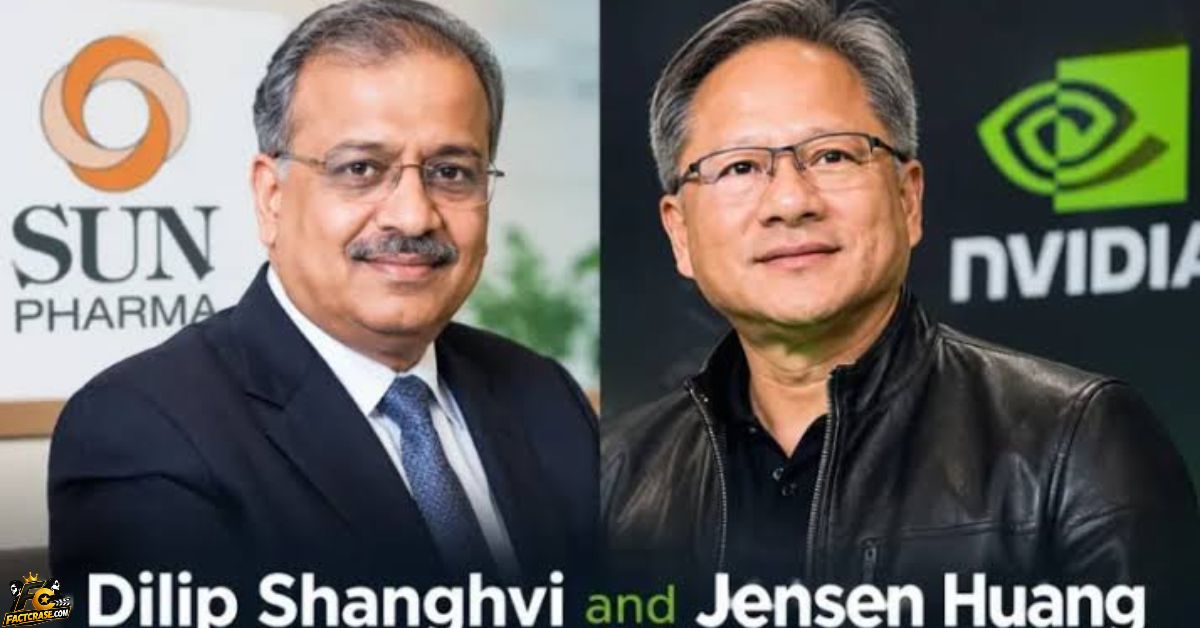

Dilip Shanghvi and Jensen Huang represent two remarkable paths to building global business empires. Shanghvi, founder of Sun Pharmaceutical Industries, built his reputation in the pharmaceutical industry through strategic expansion, acquisitions, and long-term investment in healthcare. Huang, co-founder and CEO of NVIDIA, transformed a graphics-chip company into a global leader in graphics processing units (GPUs), accelerated computing, and artificial intelligence infrastructure.
Born in India and Taiwan respectively, both entrepreneurs developed influential companies from different technological and commercial foundations. Their biographies also cover education, family, leadership roles, major milestones, and billionaire wealth. Their contrasting journeys offer useful insight into how innovation, persistence, and business strategy can shape extraordinary careers.
Fast Facts: Dilip Shanghvi vs. Jensen Huang
| Fact | Dilip Shanghvi | Jensen Huang |
| Full name | Dilip Shantilal Shanghvi | Jensen Huang |
| Born | October 1, 1955 | February 17, 1963 |
| Age in 2026 | 70 | 63 |
| Birthplace | Amreli, Gujarat, India | Taipei, Taiwan |
| Industry | Pharmaceuticals | Semiconductors and technology |
| Company | Sun Pharmaceutical Industries | NVIDIA |
| Role | Founder and Executive Chairman | Founder, President and CEO |
| Education | University of Calcutta | Oregon State University; Stanford University |
| Degree | Bachelor of Commerce | Electrical engineering degrees |
| Family | Married; two children | Married to Lori Mills; two children |
| 2026 estimated wealth | About $26.4 billion | About $187.4 billion |
Dilip Shanghvi Biography
Dilip Shanghvi is an Indian pharmaceutical entrepreneur and the founder of Sun Pharmaceutical Industries, commonly known as Sun Pharma. His career is notable for building a major healthcare business through focused product development, acquisitions and international expansion.
Early Life, Family and Education
Shanghvi was born in Amreli, Gujarat, India, in 1955 and grew up in Kolkata after his family moved there. He came from a Jain family connected to the pharmaceutical distribution trade. His father operated a wholesale medicine business, giving Shanghvi early exposure to generic drugs and pharmaceutical customers.
He attended J. J. Ajmera High School and later Bhawanipur Education Society College. He earned a Bachelor of Commerce from the University of Calcutta. His early experience working with his father’s business helped him understand how medicines were distributed and where smaller pharmaceutical companies could compete.
The contrast with Huang is significant: Shanghvi entered entrepreneurship through commercial and pharmaceutical experience, while Huang developed a technical background in electrical engineering.
Founding Sun Pharma
In 1983, Shanghvi founded Sun Pharmaceutical Industries with a reported 200 dollar loan from his father. The company initially concentrated on psychiatric drugs and started on a very small scale.
Instead of attempting to compete across every area of medicine, Shanghvi focused on selected therapeutic categories. Over time, Sun Pharma expanded into specialty drugs, dermatology, oncology and chronic therapy medicines.
This focused strategy became an important part of his business model. Rather than relying only on organic expansion, Shanghvi also used acquisitions to increase Sun Pharma’s geographic reach, product portfolio and manufacturing capabilities.
The Ranbaxy Turning Point
The Ranbaxy acquisition was one of the defining moments in Shanghvi’s career. In 2014, Sun Pharma agreed to acquire Ranbaxy Laboratories in a transaction valued at approximately 4 billion dollars.
The deal significantly increased Sun Pharma’s scale and international presence. It also demonstrated Shanghvi’s willingness to use patient capital and long-term planning rather than chasing short-term growth.
The broader Sun Pharma story also includes acquisitions and investments in areas such as specialty medicine and innovative treatments. Its purchase of Concert Pharmaceuticals was completed in 2023, adding another dimension to its specialty-drug strategy.
Awards and Public Recognition
Shanghvi has received extensive recognition for his contribution to Indian business.
Notable distinctions include:
- Padma Shri, awarded in 2016, one of India’s civilian honors.
- Ernst & Young Entrepreneur of the Year recognition in 2005.
- Ernst & Young World Entrepreneur of the Year recognition.
- Business leadership and entrepreneurship awards from several Indian institutions.
- Appointment to a central board role connected with the Reserve Bank of India.
He has also been associated with the Rhodes Scholarship program as a trustee. That should not be confused with being a Rhodes Scholarship recipient. Sun Pharma’s official biography confirms his Padma Shri and several other leadership recognitions.
Current Role and Sun Pharma’s Next Chapter
As of 2026, Shanghvi remains Executive Chairman of Sun Pharmaceutical Industries. He is also associated with Sun Pharma Advanced Research Company, which focuses on research and development.
Succession planning has become increasingly relevant because his son Aalok Shanghvi has taken on a senior leadership role as chief operating officer. This gives the company a clearer connection between its founder-led history and its next generation of management.
Jensen Huang Biography
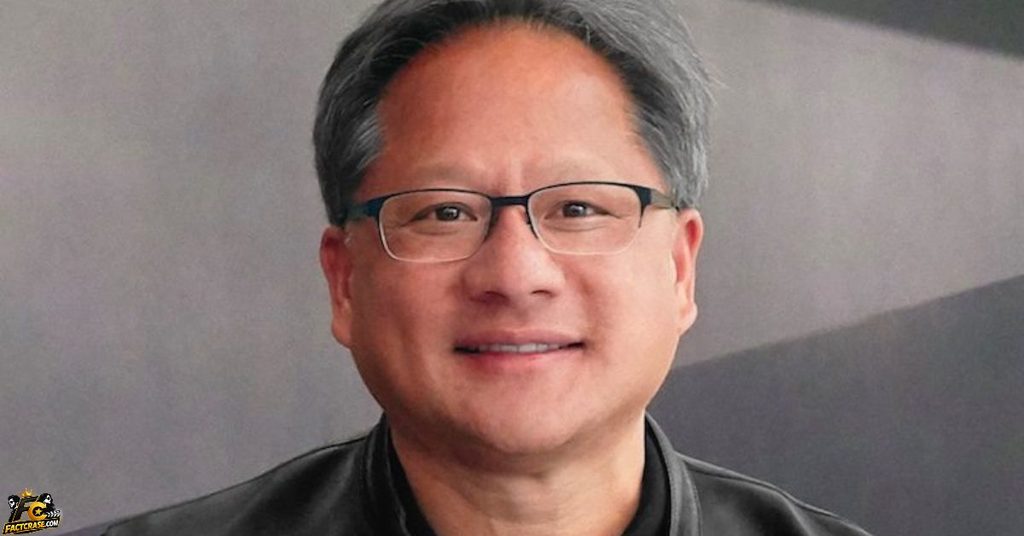
Jensen Huang is a Taiwanese-born American technology entrepreneur best known as the co-founder, president and CEO of NVIDIA. His career helped move the company from graphics chips toward graphics processing units (GPUs), accelerated computing and AI infrastructure.
Birth, Childhood and Education
Huang was born in Taiwan in 1963 and moved to the United States during childhood. A useful correction to some online biographies is that he was born in Taipei; Tainan, Taiwan is not his documented birthplace.
His education eventually took him to Oregon State University, where he earned a bachelor’s degree in electrical engineering. He later completed a master’s degree in electrical engineering at Stanford University. Before NVIDIA, he worked at LSI Logic and Advanced Micro Devices.
Read More:Karen Lynch and Elizabeth Taylor: Fact or Myth? 2026
Founding NVIDIA in 1993
Huang co-founded NVIDIA with Chris Malachowsky and Curtis Priem. The founders discussed their ideas at a Denny’s restaurant in San Jose before formally establishing the company.
NVIDIA was incorporated on April 5, 1993. Huang became CEO and has remained in that position since the company’s creation.
The original vision centered on graphics-based computing. That decision became highly consequential because the same architecture that accelerated graphics eventually became foundational to modern AI workloads.
From Graphics Chips to the AI Era
NVIDIA’s development of GPUs changed the economics of parallel computing. The company’s hardware initially became closely associated with PC gaming and computer graphics, but its CUDA software platform helped developers use GPUs for broader computational workloads.
That transition positioned NVIDIA for the artificial intelligence boom.
Today, accelerated computing is central to AI data centers, machine learning and generative AI systems. NVIDIA’s hardware and software ecosystem has therefore become an important part of global AI infrastructure. NVIDIA itself describes its evolution from graphics computing toward accelerated computing and generative AI as a major platform shift.
2026 Recognition and Influence
Huang’s influence expanded considerably as NVIDIA became one of the world’s most valuable companies. In 2026, he was appointed to the President’s Council of Advisors on Science and Technology and continued serving as NVIDIA’s CEO.
His distinctive black leather jacket, highly visible keynote speeches and public appearances have also made him one of the most recognizable figures in the semiconductor industry.
Personal Life, Marriage and Family
Although their professional lives are highly public, both entrepreneurs have generally kept much of their family life away from day-to-day business coverage.
Is Dilip Shanghvi Married?
Yes. Dilip Shanghvi is married to Vibha Shanghvi, and the couple has two children, Aalok Shanghvi and Vidhi Shanghvi.
Aalok has developed a senior career within Sun Pharma and has been involved in the company’s leadership structure. This makes family succession an important part of discussions about Sun Pharma’s long-term future.
Is Jensen Huang Married?
Yes. Jensen Huang is married to Lori Mills, whom he met while studying at Oregon State University. She was his engineering lab partner.
They have two children, Spencer Huang and Madison Huang. Both have had professional connections with NVIDIA, although their careers developed through their own areas of work rather than simply inheriting executive positions.
Net Worth and Financial Breakdown
The wealth of Dilip Shanghvi and Jensen Huang comes primarily from their ownership stakes and the market value of the businesses they helped build. Their net worth figures can change quickly because public-company shares fluctuate.
Dilip Shanghvi Net Worth
Forbes’ real-time profile placed Shanghvi’s net worth at approximately $26.4 billion in September 2026. Its March 2026 World’s Billionaires ranking put him at $25.6 billion.
His wealth is primarily connected to pharmaceuticals and his ownership interest in Sun Pharma. The company’s international scale and position in specialty and generic medicines have been central to his long-term business empire.
Jensen Huang Net Worth
Forbes reported Huang’s real-time net worth at about $187.4 billion as of September 16, 2026. The figure changes with NVIDIA’s stock price because a substantial portion of his wealth is tied to his NVIDIA holdings.
In early September, Forbes reported that Huang’s estimated fortune briefly approached $200 billion, illustrating how rapidly semiconductor valuations can affect billionaire wealth.
Selected Verified Wealth Snapshots
The most useful way to interpret billionaire wealth is to treat it as an estimate rather than cash held in a bank account.
| Person | 2026 wealth snapshot | Main wealth driver |
| Dilip Shanghvi | ~$25.6B | Sun Pharma |
| Dilip Shanghvi | ~$26.4B real-time | Sun Pharma and related holdings |
| Jensen Huang | ~$187.4B real-time | NVIDIA ownership |
| Jensen Huang | Nearly $200B in a September snapshot | NVIDIA stock appreciation |
Historical financial coverage has also used figures such as 26 billion dollars, 160 billion dollars, and 197.6 billion dollars at different points in billionaire wealth tracking. Such figures should not be mixed with current estimates because the underlying stock prices and valuation dates differ.
Career Timeline Comparison
The career timeline of Dilip Shanghvi and Jensen Huang shows how two founders created global businesses through different forms of specialization.
| Period | Dilip Shanghvi | Jensen Huang |
| 1950s–1970s | Born in Gujarat; grows up in Kolkata and studies commerce | Born in Taiwan and later moves to the U.S. |
| Early career | Works in pharmaceutical distribution | Works at LSI Logic and AMD |
| 1983 | Founds Sun Pharma | — |
| 1993 | Expands Sun’s operations and R&D | Founds NVIDIA |
| 1999 | Continues pharmaceutical expansion | NVIDIA’s GPU strategy gains momentum |
| 2014 | Sun announces major Ranbaxy acquisition | NVIDIA expands its computing platform |
| 2023 | Sun completes Concert Pharmaceuticals acquisition | NVIDIA benefits from growing AI demand |
| 2026 | Continues as Executive Chairman | Continues as CEO and President |
The key difference is the product cycle. Shanghvi built wealth through medicines, manufacturing, acquisitions and long-term healthcare demand. Huang’s fortune became closely linked to semiconductor innovation, GPU computing and the explosive expansion of AI infrastructure.
Dilip Shanghvi vs. Jensen Huang: What Makes Their Stories Different?
The stories of Dilip Shanghvi and Jensen Huang are comparable because both are self-made founders who retained substantial influence over businesses they helped create. However, the industries, technologies and paths to scale are very different.
Shanghvi’s model was built around pharmaceuticals. His competitive advantage came from understanding medicine distribution, identifying underserved therapeutic categories, developing products and using acquisitions to expand Sun Pharma.
Huang’s model is rooted in technology. NVIDIA’s growth depended on developing GPUs, building a software ecosystem around CUDA, and positioning accelerated computing for new workloads.
Their leadership styles also reflect their sectors:
- Shanghvi: Long-term pharmaceutical expansion, acquisitions and patient capital.
- Huang: Semiconductor innovation, platform development and rapid technology cycles.
- Sun Pharma: Medicines, specialty drugs and healthcare.
- NVIDIA: GPUs, AI infrastructure and accelerated computing.
- Shanghvi’s wealth: Primarily tied to pharmaceutical equity.
- Huang’s wealth: Highly sensitive to NVIDIA’s market value and stock price.
Neither career can be reduced to a single breakthrough. Both required decades of capital allocation, product decisions and adaptation to changing markets.
Frequently Asked Questions
Who is richer, Dilip Shanghvi or Jensen Huang?
In September 2026 estimates, Jensen Huang’s reported wealth is substantially higher. Forbes listed Huang around $187.4 billion versus about $26.4 billion for Shanghvi.
What company did Dilip Shanghvi found?
Dilip Shanghvi founded Sun Pharmaceutical Industries, which grew from a small Indian pharmaceutical business into a major international drug company.
What company did Jensen Huang co-found?
Jensen Huang co-founded NVIDIA in 1993 with Chris Malachowsky and Curtis Priem. He has served as its CEO since its founding.
How old are Dilip Shanghvi and Jensen Huang?
Dilip Shanghvi is age 70 in 2026, while Jensen Huang is age 63, based on their reported birth years of 1955 and 1963.
Are Dilip Shanghvi and Jensen Huang self-made billionaires?
Yes. Forbes identifies dilip shanghvi and jensen huang both as self-made billionaires. Their fortunes primarily developed through ownership and leadership of companies they founded rather than inherited operating businesses.
What is Dilip Shanghvi’s net worth in 2026?
Forbes’ real-time estimate placed Dilip Shanghvi’s net worth at approximately $26.4 billion in September 2026, while its March estimate was $25.6 billion.
What is Jensen Huang’s net worth in 2026?
Forbes reported Jensen Huang’s real-time net worth at approximately $187.4 billion on September 16, 2026. Because most of his wealth is connected to NVIDIA, the number can change with the stock price.
Have Dilip Shanghvi and Jensen Huang ever worked together?
There is no well-documented public record showing that Dilip Shanghvi and Jensen Huang have worked together on a company, major project or formal business partnership. Their businesses operate primarily in pharmaceuticals and semiconductors.
Fast Facts
- Dilip Shanghvi: Founder and Executive Chairman of Sun Pharmaceutical Industries.
- Jensen Huang: Founder, President and CEO of NVIDIA.
- Shanghvi birth: 1955, Amreli, Gujarat, India.
- Huang birth: 1963, Taipei, Taiwan.
- Shanghvi education: Bachelor of Commerce, University of Calcutta.
- Huang education: Oregon State University and Stanford University.
- Sun Pharma founded: 1983.
- NVIDIA founded: April 5, 1993.
- Shanghvi’s initial capital: Reported 200 dollar loan from his father.
- NVIDIA founders: Jensen Huang, Chris Malachowsky and Curtis Priem.
- Major Sun Pharma milestone: 2014 Ranbaxy acquisition.
- Huang’s technology: GPUs, CUDA and accelerated computing.
- Shanghvi recognition: Padma Shri in 2016.
- Huang’s 2026 Forbes snapshot: About $187.4 billion.
- Shanghvi’s 2026 Forbes snapshot: About $26.4 billion.
Conclusion
The stories of Dilip Shanghvi and Jensen Huang demonstrate two distinct routes to building global companies. Shanghvi used pharmaceutical expertise, focused product development, acquisitions and patient capital to build Sun Pharma into an international healthcare business. Huang combined electrical engineering, semiconductor design, GPUs and software to transform NVIDIA into a major force in accelerated computing and AI infrastructure.
Their financial positions in 2026 also reflect the different economics of their industries. Shanghvi’s wealth is tied primarily to a mature global pharmaceutical enterprise, while Huang’s fortune is strongly influenced by NVIDIA’s rapidly changing market value. Both remain closely associated with the companies they founded, making their career timelines important examples of long-term founder leadership.